'SWEDISH COUNTRY' IS THE DESIGN TREND TO KNOW NOW – HOW TO GET THE LOOK WITH MISMATCHED PIECES, BOLD PATTERNS AND MORE
Browsing the affordable Swedish country homes featured on the cult Instagram account, @CheapNordicHouses is enough to inspire fantasies of packing up and moving north. A three-bedroom home in Sweden’s High Coast for £54,000? Sign us up.
The account, which highlights picturesque properties across the Nordic region, presents Swedish country life as both deeply romantic and, tantalisingly, not entirely beyond reach.
It's little wonder that the Swedish country aesthetic is enjoying renewed attention.
What is Swedish country style?
Swedish country interiors are shaped as much by their architecture as by their decoration. Period kitchens, antique wood-burning stoves, distinctive tiles and characterful lighting are all common features, as are narrow, steep staircases leading to attic-like upper floors. Styles and periods overlap, creating interiors that feel eclectic, personal and authentic.
“Swedish country, to me, is deeply tied to nature and light,” says Niki Brantmark, author and founder of the design blog My Scandinavian Home. “It’s a style that’s pared-back yet cosy. Rooms are layered with textiles such as rugs and throws, alongside painted furniture. The charm comes from wear, nostalgia and a sense of familiarity rather than anything overly curated.”
Here are some of our favourite elements of Swedish country style – and the principles worth borrowing at home.
Red exteriors
Swedish country style is inseparable from the landscape that produced it, from cottages scattered across rocky islands, to villas and farmhouses set among green meadows.
“The houses themselves set the tone – simple timber forms, steep roofs designed to let snow fall away, colourful painted wood, stone or old brick exteriors and windows positioned to let in as much light as possible,” says Niki.
No matter what part of the country you travel to, you’ll notice that many of the homes are painted red.
For centuries, Swedish houses were painted with Falun Red, an iron-rich pigment associated with the copper mines around Falun. As well as protecting timber façades from the elements, its warm, earthy colour brought a welcome sense of warmth to a climate characterised by long, cold and dark winters.
Today, the familiar rust-red pigment is produced by Falu Rödfärg, using mineral pigment derived from the historic Falun mine.
Chromatic interiors
Sweden is a country of pronounced seasonal contrasts, with the long, luminous days of summer giving way to dark winters in which daylight is scarce. Something of that duality can also be found in Swedish interiors.
Alongside the restrained, pared-back minimalism for which Scandinavian design is known sits another tradition altogether, one that is rich in colour, pattern and decorative exuberance.
“They have long, grey winters in Sweden, so they put a lot more colour in the home and keep it sunny and happy,” says designer Meta Coleman.
“In some regions the look is fairly restrained, while in others, especially the more folk-influenced areas inspired by [artist] Carl Larsson, there’s more pattern, colour and playfulness," adds Niki. “That’s where Swedish country has been heading in recent years – a little more colour and vibrant, nature-inspired patterns in wallpaper, upholstery and cushions. It’s all feeling more folk.”
Folk Art–inspired flourishes
Few figures are more closely associated with the colourful domestic ideal of Swedish country style than the painter Carl Larsson.
An important figure in the Swedish Arts and Crafts movement, Larsson painted his family life extensively, providing an unusually detailed record of the interiors created by his wife, Karin Larsson. Green ceilings, yellow walls, orange-red mouldings and furniture embellished with painted and stencilled decoration all featured in his family home.
“They designed and painted furniture,” Meta says of the Larssons. “The tile stoves were from the 1700s, painted with colourful patterns that fit so well with his family’s aesthetic in the 1800s and 1900s. This solidifies my belief that if you like it and are drawn to it, it will work in your home.”
While Swedish homes today often favour warm natural wood tones and bright whites, many traditional Swedish country homes often retain something of the “Larsson effect".
Painted wood
Timber has always been abundant across the Nordic countries, and species such as spruce and pine have long formed the architectural and decorative backbone of Swedish interiors.
Floors might be painted in geometric patterns, furniture ornamented with stencilled motifs and the mouldings around ceilings, windows and doorways picked out in contrasting colours.
Nature-inspired designs also appear on larger pieces such as trunks and clocks, as well as in less obvious places, including the backs of doors. Smaller objects – notably the hand-carved Dala horse and traditional door harps – are similarly embellished with painted decoration.
According to Meta, paint also offered a practical means of elevating less expensive woods such as pine, which can yellow with age.
“Oftentimes the everyday people couldn’t afford nicer wood,” she says. “They used cheaper pine and painted the furniture with the same level of craftsmanship, which created personalised, colourful and more interesting furniture than the traditional norm.”
A mix of patterns
Pattern is another defining element of Swedish interiors.
In many Swedish homes, fabrics and wall coverings by Svenskt Tenn hold particular significance. The Stockholm design house is closely associated with Josef Frank, whose exuberant, nature-inspired textiles brought bold colour and large-scale botanical motifs to twentieth-century Swedish design.
Frank’s work, much of it dating from the 1930s, has enjoyed a wave of popularity in recent years.
“I love that people are appreciating the bold and colourful patterns that Josef Frank designed 100 years ago,” says Meta. “They are timeless, yet they still feel so fresh and modern.”
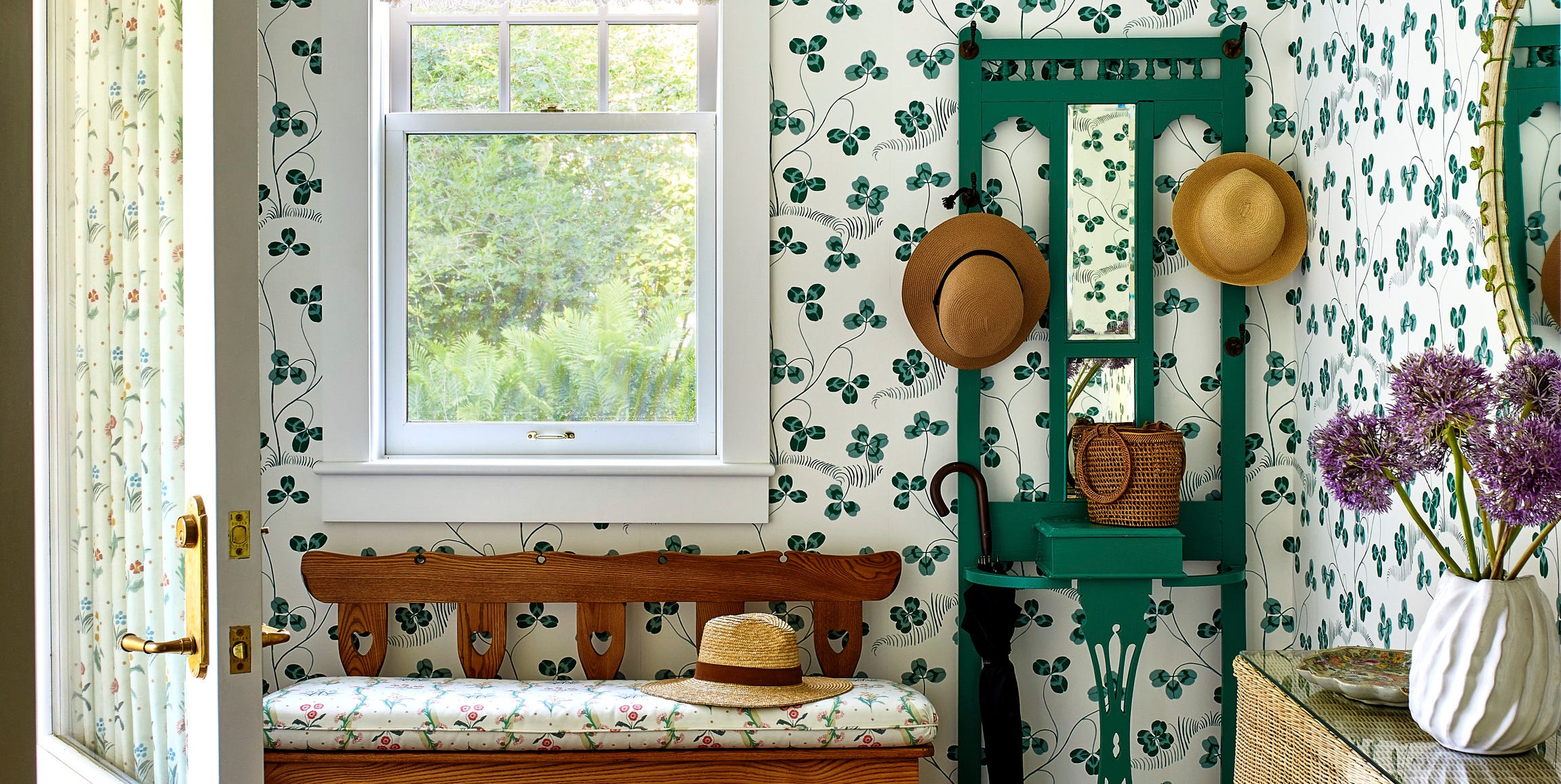
Swedish country interiors offer a persuasive lesson in pattern mixing, with floral wallpapers, large geometric rugs and folk art designs intermingling.
"If you’re a beginner with pattern-mixing, vary scale – one quite a bit larger and then smaller patterns with it,” says Meta.
The most successful Swedish country rooms rarely feel perfectly coordinated, but they have a certain harmony. “And also a bit of a disharmony, which builds interest and makes it feel not so contrived,” adds Meta.
Eclectic furnishings
One of the great joys of Swedish country interiors is its disregard for matching furniture.
“There’s a sense that these homes have been decorated slowly, over time, creating an ease that makes Swedish country feel so natural and lived-in,” says Niki. There’s an intentionality to the mishmash – thrifted finds mingling with family heirlooms, the mixing of time-worn antiques that have a rich patina with more streamlined midcentury modern furnishings and contemporary pieces.
“It doesn’t have to be all one era,” says Meta. “The joy of decorating is the mix of, for example, a primitive table with a rococo chair. It’s the juxtaposition of a simple rustic shape with an overly decorated, ornate one. They both can complement each other in a unique way.”