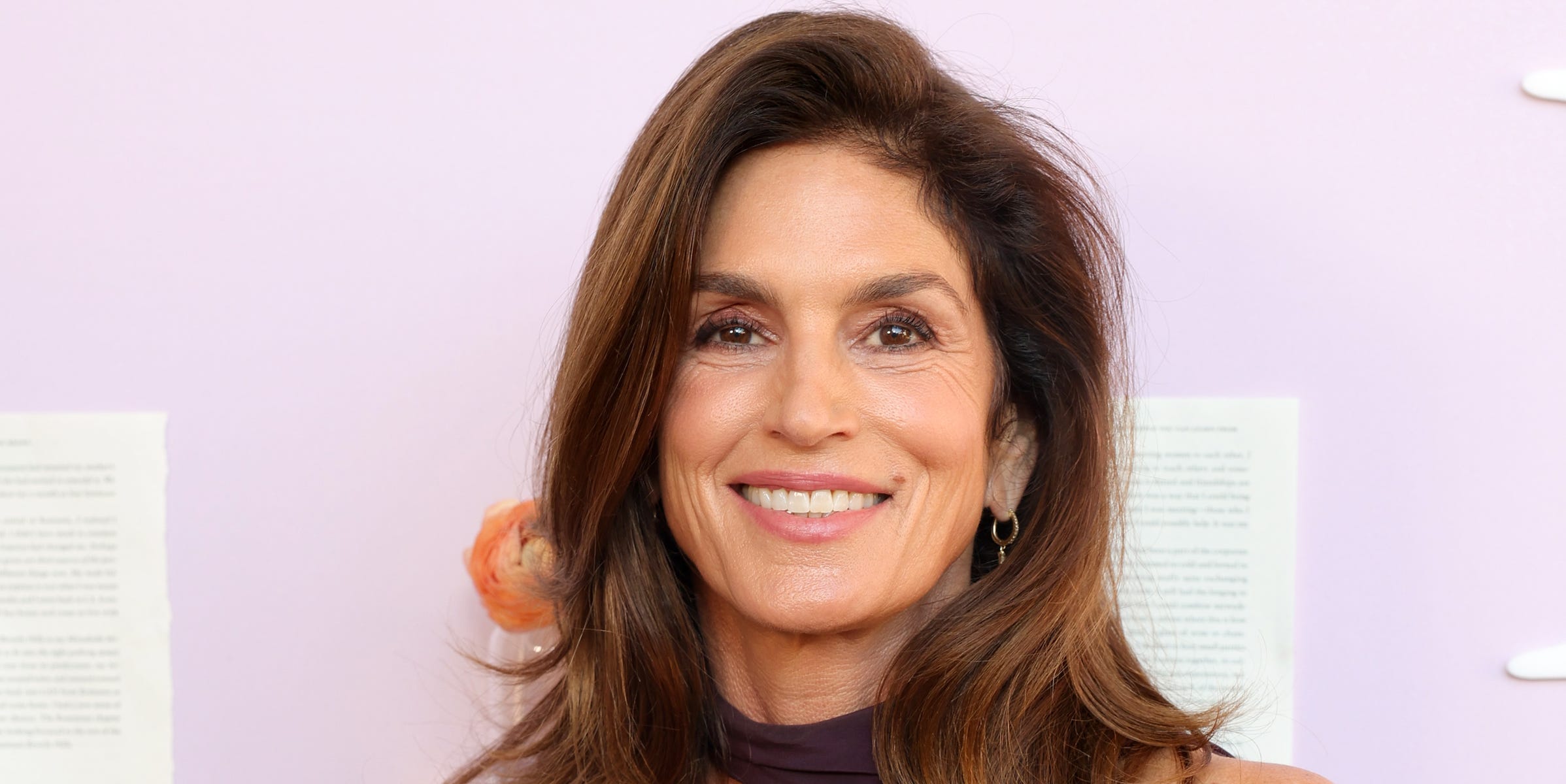
CINDY CRAWFORD, 60, ON THE ONE SIMPLE EXERCISE SHE’S SWORN BY FOR A DECADE
In fitness, as in life, it’s really very important to be realistic about your limits. For me (middle-aged, middle-sized, middlingly muddled) that means getting gradually, steadily fit (enough) rather than suddenly, miraculously, glorious. A Cindy Crawford body, then, is not what I’m aiming for. Still, even supermodels are relatable in some small ways.
At 60, Cindy, it turns out, suffers from a dodgy back just like the rest of us. Her solution? Reformer pilates. ‘Currently, I do Pilates twice a week on a reformer, which I love,’ she said on the Him & Her Show. ‘I’ve only been doing that for the last 10 years, and I have to say, because I sometimes get lower back stuff, even if my back’s hurting, I can do Pilates because I can modify it. And I have never gotten hurt doing Pilates. I know it can be really, really hard, too, but I find it very… opening and feminine in a way.’
‘The key to an injury-free, energetic life after age 60 is learning to move correctly and building strength from the inside out,’ explains Noemi Nagy-Bhavsar, a physio-based Pilates mat and reformer instructor with a background in neurorehabilitation. This gets more important as we age: ‘As the body goes through hormonal changes during peri- and menopause and bone density decreases, it’s vital to focus on how we can counteract this with exercise,’ she says.
While mat Pilates is done on a mat (duh), using bodyweight resistance to build core strength, reformer Pilates uses a machine with springs for adjustable, full-body resistance and support. But, says Noemi, the term ‘core’ is commonly misunderstood. In fact, you have not one core, but three, and she says ‘challenging and strengthening them all together will achieve equilibrium and whole-body stability’.
The powerhouse
The most talked-about core area is the centre of your body, often referred to as the Powerhouse, says Noemi: ‘This part focuses on your deep centring muscles, including the pelvic floor, deep transversus abdominis and diaphragm. These muscles are responsible for keeping your trunk stable and helping you feel strong, aligned and balanced.’
Sadly, our increasingly sedentary lifestyles weaken them. In fact, sitting for more than seven hours a day has been shown to significantly increase your risk of back pain, because it puts more pressure on your intervertebral discs and deactivates your core muscles.
Pilates balancing exercises are an excellent way to work these muscles, suggests Noemi, and they can improve your posture, too.
Feet and ankles
Each of your feet contains 26 bones and 33 joints, and they’re another crucial core area, explains Noemi. ‘The body is so connected that improving the alignment of the feet and ankles can relieve back or knee pain and build a stronger, more stable body. A good Pilates class should include focused work on the feet and ankles, their alignment, balance, strength and flexibility.’
Shoulders, neck and head
‘Our head is quite heavy, and sitting for long periods can change our posture,’ says Noemi. ‘Tech neck’ is the term coined to described the chronic neck, shoulder and upper-back pain that results from all our hunching over laptops and phones.
To counter it, Pilates classes focus on strengthening and stabilising our shoulders, chest and neck, evenly distributing our muscle composition and alignment, says Noemi. Key muscles here include the lats, deep neck flexors and chest muscles.
Three steps to get started
- ‘Listen to your breath,’ says Noemi. ‘Be curious about how your breath can soften and release muscle tension. Take deep breaths and slow exhalations to allow the parasympathetic nervous system and muscles to respond.’
- ‘Be gentle and slow down,’ she adds. ‘Rapid, sharp, uncontrolled movements can increase injury risk.’
- ‘Pay attention to yourself,’ Noemi concludes. ‘Avoid comparing yourself with others. Where are you holding unnecessary tension? Observation is the first step to becoming more fluid in your movements, and fluid movements come with many benefits.’
This year, GH is getting fit (enough). Join us!
The Fit (Enough) Club is an accessible, realistic and fun fitness community for women who hate fads and like treats. Sign up to the Good Life newsletter and, along with wellness tips and health advice, you’ll get a weekly dose of fitness advice, videos and expert insights.
Get your Fit (Enough) Club fix to keep you moving and motivated throughout 2026. You’ll also receive your special welcome pack.
Ready? Get set... Go!
2026-02-23T16:52:57Z